

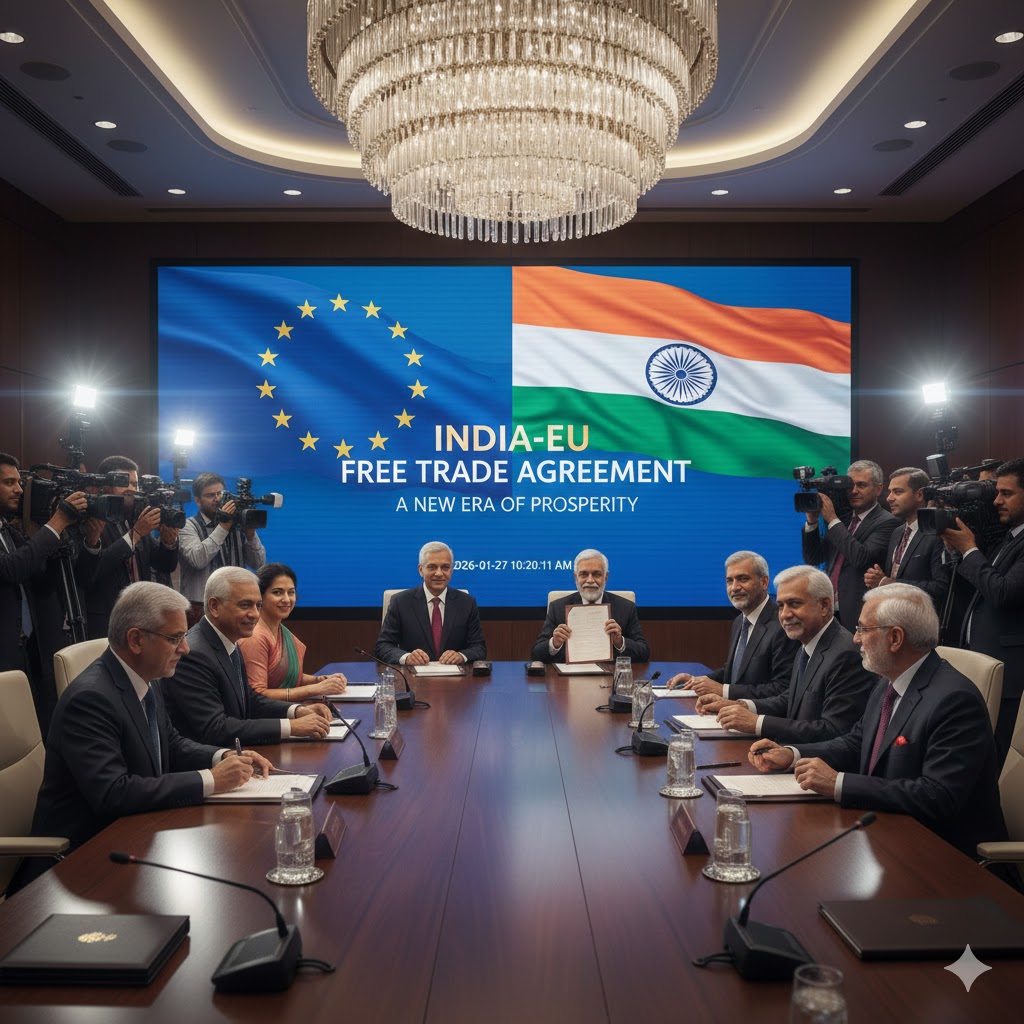
As of late January 2026, the India-EU Free Trade Agreement (FTA) has reached a historic turning point. After years of “will-they-won’t-they,” the negotiations have officially concluded, signaling a new era for Indian exporters.
Thank you for reading this post, don't forget to subscribe!For a specialized player like Shidhin Agrotech, based in the heart of Jamshedpur, this isn’t just a policy update—it’s a massive growth lever. Here is a breakdown of the FTA from the perspective of an Indian agri-exporter.
1. The Long Wait: 19 Years in the Making
The road to this agreement has been anything but smooth.
- The Launch (2007): Negotiations originally began nearly two decades ago.
- The Stagnation (2013): Talks were suspended due to fundamental gaps in expectations regarding market access, high tariffs on cars/spirits, and labor standards.
- The Re-launch (2022): Post-pandemic shifts and the “China Plus One” strategy brought both parties back to the table.
- The Finish Line (January 2026): Officials have finalized the text, with legal scrubbing underway for formal implementation.
2. Why Now? The Strategic Shift
Why did the EU and India finally decide to shake hands?
- Supply Chain Resilience: The EU wants to reduce its dependence on China and sees India as the ultimate reliable alternative.
- Economic Ambition: India is chasing a $5 trillion economy goal, and the EU is India’s largest trading partner in goods (surpassing $130 billion).
- Geopolitical Alignment: In a fragmented world, both regions need strong, democratic allies to secure food and energy corridors.
3. Advantages & Disadvantages: The Shidhin Agrotech Lens
As an exporter of premium sesame seeds, turmeric, cashews, and millets, the stakes are high.
The Advantages (The Wins)
- Duty-Free Market Access: Currently, Indian agri-products face tariffs that make us less competitive than countries like Vietnam. The FTA aims to slash these, giving Shidhin Agrotech a price advantage in the European market.
- Easier Compliance: A major part of the deal involves “Mutual Recognition” of standards. This means the rigorous quality checks Shidhin already performs (FSSAI, APEDA) will align more closely with EU requirements, reducing rejected shipments.
- Boost for Value-Added Products: The EU has high demand for Organic and Superfood products. For our Moringa powder and Fox Nuts (Makhana), the FTA opens the door to high-end European retail shelves.
The Disadvantages (The Challenges)
- Non-Tariff Barriers: Even with zero duties, the EU’s “Green Deal” and Carbon Border Adjustment Mechanism (CBAM) could introduce new environmental costs.
- Competition in Dairy/Processed Foods: While India protected its sensitive small farmers, the entry of European agro-processing giants could increase competition for domestic processors.
- Stricter IP Rights: The EU often pushes for “TRIPS-plus” standards, which could impact the cost of certain agricultural inputs or seeds in the long run.
4. Shidhin Agrotech’s Strategic Outlook
From our headquarters in Jharkhand, we see this FTA as a Golden Bridge. Our focus on Organic Turmeric and Sortex-cleaned Sesame Seeds aligns perfectly with the EU’s shift toward healthy, transparently-sourced ingredients.
“The India-EU FTA isn’t just about moving containers; it’s about moving Indian quality to the world’s most discerning tables. For Shidhin Agrotech, Europe is no longer a ‘distant dream’ but a ‘domestic-style’ extension of our market.”