

In the first half of 2026, the world is finding itself in the grip of a “perfect storm” for food security. While we have spent years discussing the long-term impacts of climate change, a sudden and violent shift in the geopolitical landscape—specifically the conflict in the Middle East and the closure of the Strait of Hormuz—has fast-tracked a global agricultural crisis.
Thank you for reading this post, don't forget to subscribe!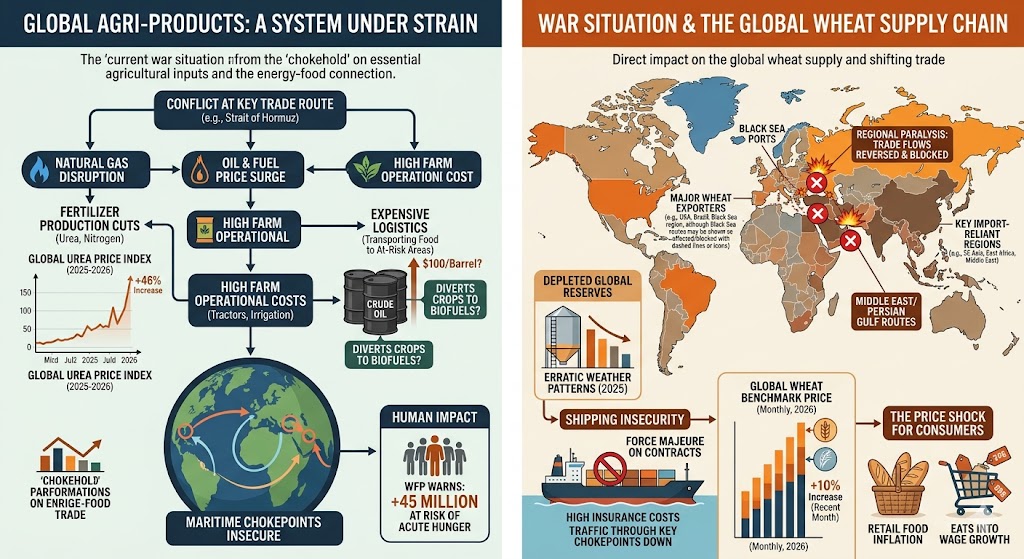
1. The Fertilizer Chokehold
We often think of agriculture as a “soil and sun” industry, but modern farming is powered by nitrogen-based fertilizers, which are heavily dependent on natural gas.
The current conflict in the Persian Gulf has disrupted one of the most vital arteries for these inputs. Over 30% of global urea (a primary fertilizer) is exported through the Strait of Hormuz. With shipping traffic down by nearly 90% in recent weeks, farmers from Brazil to the United States are seeing prices for urea surge by nearly 46%.
The Ripple Effect: If a farmer cannot afford fertilizer today, the world sees a lower crop yield in six months. This “locked-in” food insecurity means we are already feeling the effects of shortages that won’t physically manifest until the next harvest.
2. The Energy-Food Connection
War doesn’t just block grain; it makes the energy required to grow it prohibitively expensive. In April 2026, we are seeing the “largest supply disruption in the history of the global oil market.”
- Farm Operations: The cost of running tractors and irrigation systems has skyrocketed.
- Logistics: In regions like East Africa, fuel price spikes have doubled the cost of transporting water and food to drought-affected areas.
- Biofuel Pivot: As oil prices climb toward $100 per barrel, there is a renewed (and dangerous) incentive to divert crops like maize and sugarcane away from food plates and into biofuel tanks, further tightening the food supply.
3. A Shift in Global Demand
Unlike the Ukraine conflict of 2022, which saw the direct destruction of grain “breadbaskets,” the 2026 crisis is unique. The Middle East is a net importer of food.
With the region paralyzed, the usual flow of global trade has reversed. While countries like the U.S. and Brazil may have grain in their silos, they have fewer ways to get it to the buyers who need it most. Simultaneously, import-dependent nations in Southeast Asia and Africa are scrambling for the remaining surplus, driving up “benchmark” prices for staples like wheat and rice by over 10% in just the last month.
4. The Human Cost: 45 Million at Risk
The World Food Program (WFP) recently warned that the economic shocks from the current war situation could push an additional 45 million people into acute hunger by mid-2026. This isn’t just a matter of “high prices” at the grocery store; for many, it is a matter of total lack of access.
Why this time is different:
- Depleted Reserves: Global grain reserves were already low due to erratic weather patterns in 2025.
- Shipping Insecurity: Insurers are increasingly reluctant to cover vessels in high-risk zones, leading to “Force Majeure” declarations on food contracts.
- Inflationary Pressure: Retail food inflation is crossing the 4% mark in many developing economies, far outpacing wage growth.
Final Thoughts: The Need for Resilience
The current war situation has exposed the fragility of our “just-in-time” global food system. The need for agricultural products is no longer just about trade; it’s about geopolitical stability.
Governments are now pivoting toward:
- Domestic Production: Reducing reliance on imported fertilizers by investing in green ammonia.
- Diversified Routes: Finding alternatives to maritime chokepoints.
- Emergency Stocks: Treating grain as a strategic asset, much like oil or gold.
The lesson of 2026 is clear: peace is the most important ingredient in any recipe. Without it, the world’s most basic need—food—becomes its most volatile weapon.