

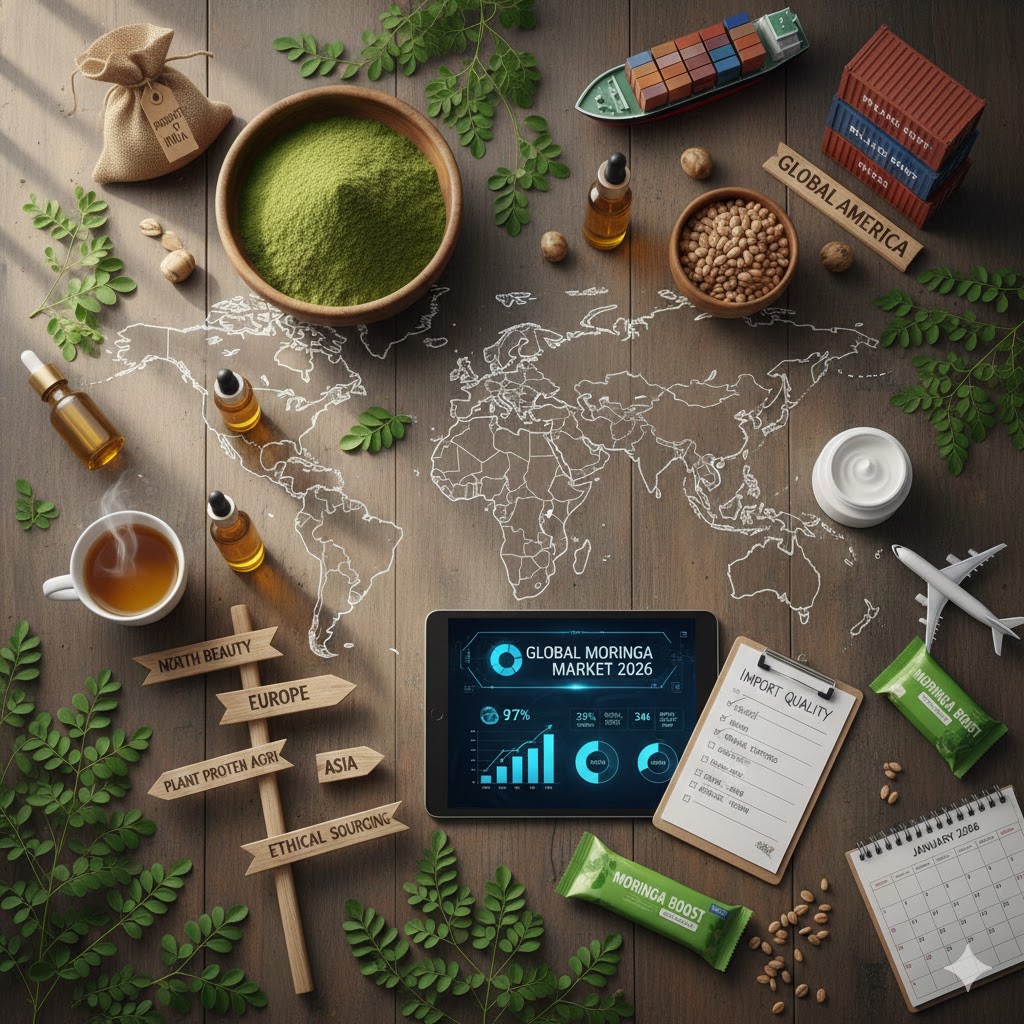
In the rapidly evolving landscape of 2026, the global health and wellness market has undergone a fundamental shift toward “preventive nutrition.” At the center of this revolution is Moringa Oleifera, often dubbed the “Miracle Tree.” For businesses in the food, cosmetic, and pharmaceutical sectors, importing high-quality moringa powder and seeds is no longer just a niche opportunity—it is a strategic necessity.
Thank you for reading this post, don't forget to subscribe!As of early 2026, the global moringa products market is valued at approximately $10.78 billion, with projections to reach nearly $25 billion by 2035. This explosive growth is driven by a 9.7% CAGR, signaling a massive opportunity for importers.
1. The Nutritional Powerhouse: Moringa Powder
Moringa leaf powder remains the most dominant segment of the market, accounting for over 33% of global share. Its importance as an import good stems from its “superfood” status, offering a nutrient density that few other plants can match:
- Protein Champion: It contains about 25% plant-based protein, including all 9 essential amino acids, making it a staple for the booming vegan and vegetarian markets.
- Mineral Rich: It boasts 17 times more calcium than milk and 25 times more iron than spinach, serving as a natural solution for anemia and bone health.
- Immune Support: High concentrations of Vitamin A and C have made it a top-tier ingredient for immune-boosting supplements, a trend that has accelerated since 2024.
2. The Industrial Versatility of Moringa Seeds
While the powder dominates the supplement aisle, moringa seeds are the rising stars of the industrial and cosmetic worlds. Importers are increasingly looking to seeds for several high-value applications:
- “Ben Oil” Extraction: Moringa seeds contain about 40% oil. This oil is highly stable, resistant to rancidity, and rich in antioxidants. In 2026, the clean-beauty sector is heavily importing moringa oil for its anti-aging and moisturizing properties in premium skincare.
- Water Purification: Moringa seed cake (the byproduct of oil extraction) contains proteins that act as natural coagulants. This makes it an essential import for sustainable water treatment initiatives in developing regions.
- Agricultural Potential: With its drought-tolerant properties, importing seeds for large-scale cultivation is a key strategy for regions facing climate-driven agricultural shifts.
3. Why Import Now? Key Market Drivers for 2026
For B2B buyers and importers, several trends make 2026 the “Golden Year” for Moringa:
- The “Organic” Mandate: In major markets like North America and Europe, organic certification is no longer optional. Importers who secure supply chains for Certified Organic Moringa can command a 50% price premium.
- Clean Label Demand: Consumers are fleeing synthetic additives. Moringa offers a “clean label” alternative for food fortification, natural coloring, and preservation.
- Supply Chain Dominance: India remains the world’s largest producer, but European imports from African nations (like Malawi and Nigeria) are seeing a 34% annual increase, providing diverse sourcing options for global businesses.
Pro Tip for Importers: Ensure your moringa powder has a moisture content below 10% to prevent mold growth during transit and maintain shelf stability.
4. Summary of Global Demand (2025–2026)
| Segment | 2025 Market Value | 2026 Estimated Value | Key Driver |
| Moringa Powder | $9.83 Billion | $10.78 Billion | Plant-based protein & Immunity |
| Moringa Oil/Seeds | $1.20 Billion | $1.35 Billion | Clean-beauty & Cosmetics |
| Moringa Tea | $1.15 Billion | $1.28 Billion | Functional wellness drinks |
Conclusion
Importing moringa powder and seeds is more than a trend; it’s a pivot toward sustainability and nutrient-dense living. Whether you are formulating the next big “superfood” snack or a luxury face oil, moringa provides the versatility and consumer appeal needed to thrive in today’s market.