

The world of international trade is no longer just about moving boxes from Point A to Point B. In 2026, the global exporter is a digital strategist, a sustainability expert, and a geopolitical diplomat all rolled into one. With global real GDP growth forecast at 3.1% and a massive shift toward South-South trade (trade between developing nations), the landscape is ripe for those who know where to look.
Thank you for reading this post, don't forget to subscribe!Whether you are an established player or a budding entrepreneur, here is your SEO-optimized guide to winning the export game this year.
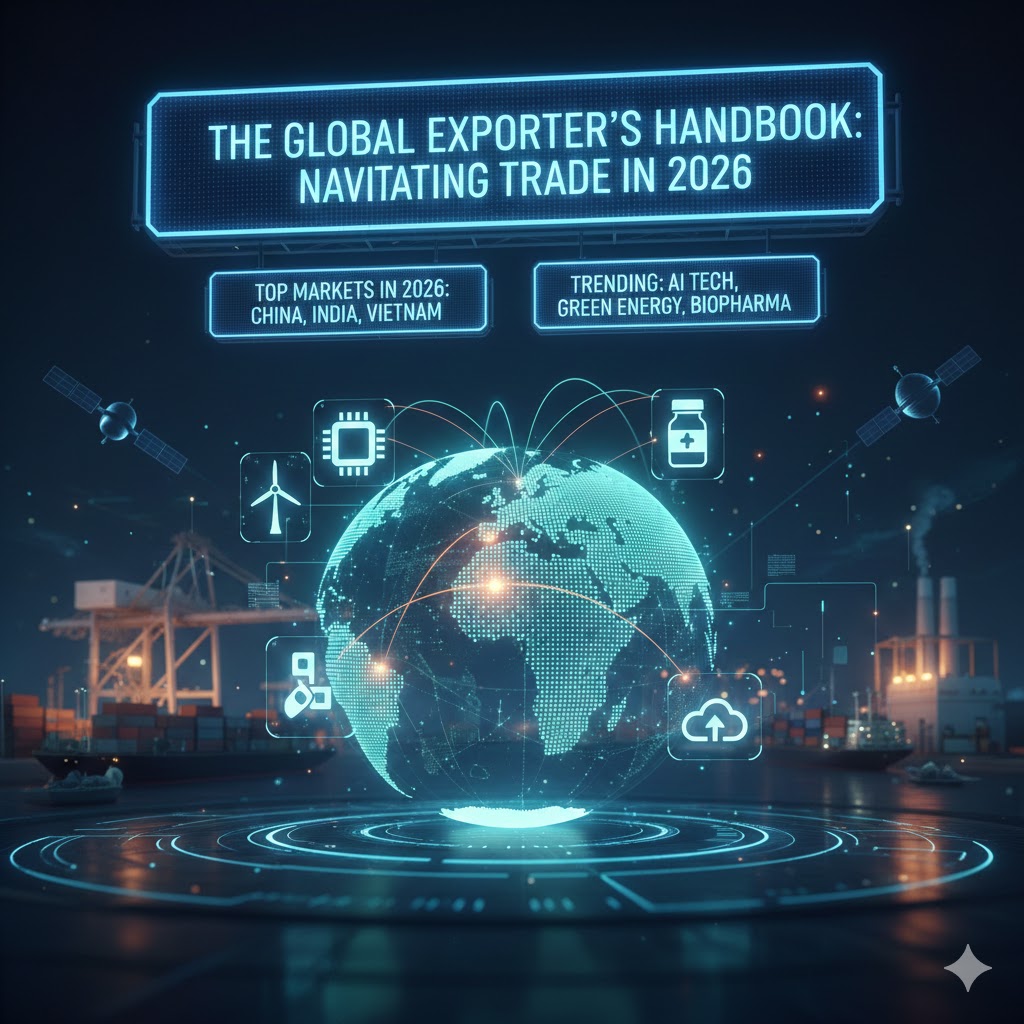
1. Follow the Money: Top Markets in 2026
While traditional giants like the USA, China, and Germany remain the heavyweights in total volume, the momentum has shifted.
- The Power Couple: China and India are set to contribute over 43% of global growth in 2026. India, in particular, has become a manufacturing powerhouse for electronics and pharmaceuticals.
- The “Plus One” Destinations: Countries like Vietnam and Mexico are thriving as global firms diversify away from single-source supply chains.
- The Digital Frontier: If you aren’t exporting physical goods, look at the USA, UK, and India—the world’s leaders in digital services and SaaS.
2. Trending Commodities: What’s in Demand?
Success in exporting starts with the right product. In 2026, demand is being driven by the “Green and Gold” transitions.
| Category | High-Demand Products | Why It’s Booming |
| Tech & Energy | Semiconductors, Copper, Lithium | Essential for the AI infrastructure boom and EV batteries. |
| Agri-Tech | Spices, Organic Grains, Processed Foods | Global shift toward health-conscious and sustainable eating. |
| Pharma | Generic Medicines, Bio-pharma | Increasing healthcare needs in emerging markets (Africa/LATAM). |
| Services | Digital Marketing, Cloud Consulting | The 2026 workforce is global, remote, and digital-first. |
3. The 2026 Compliance Checklist
The rules of the game have changed. “Stagflation light” and rising protectionism mean your paperwork must be flawless.
- CBAM Readiness: If you’re exporting to Europe, the Carbon Border Adjustment Mechanism (CBAM) is now a reality. You must track and report the carbon footprint of your products.
- Digital-First Customs: Automated product classification and AI-driven sanctions screening are no longer optional—they are the standard for avoiding costly port delays.
- Supply Chain Traceability: Buyers now demand “audit-quality” data. They want to know exactly where every raw material was sourced to ensure ethical labor standards.
4. How to Scale Your Export Business
To move from a local seller to a global “Exim” (Export-Import) leader, focus on these three pillars:
- Diversify Your Corridors: Don’t rely on one buyer or one country. Look into Intra-Asia trade, which is currently the fastest-growing trade region in the world.
- Leverage Trade Finance: Use tools like Receivable Finance or Factoring to bridge the gap between shipping your goods and getting paid, especially as payment cycles lengthen in 2026.
- Build a Resilient Logistics Network: With freight rates remaining volatile, partner with logistics providers who offer real-time tracking and multi-modal (sea, air, rail) options.
Pro-Tip: In 2026, the most successful exporters aren’t just selling a product; they are selling a reliable supply chain.
Ready to take your business global?
The world is looking for new, reliable partners to fill the gaps in a shifting economy. If you can master the blend of high-quality production and digital compliance, 2026 could be your biggest year yet.
In today’s global marketplace, exporters and importers face a myriad of challenges and opportunities
One of the primary challenges is navigating the complex regulatory landscape that varies from country to country.
At World’s Exporter Importer, we have developed a comprehensive strategy to maximize our business potential.
Our team of experts continuously assesses market trends to identify the most lucrative opportunities.
Leveraging Diverse Markets: By diversifying our product offerings and expanding into emerging markets, we have been able to tap into new revenue streams and mitigate risks associated with economic fluctuations.
This approach not only reduces our reliance on any single market but also enhances our overall resilience.
Streamlining Supply Chain: Our investment in advanced logistics and supply chain management has allowed us to optimize operations, reduce costs, and ensure timely delivery of goods to our customers.
This commitment to improving our supply chains has proven essential in a world where speed and reliability are paramount.
Building Strategic Partnerships: Collaborating with key stakeholders, including manufacturers, distributors, and local authorities, has enabled us to strengthen our market presence and enhance our competitive edge.
These partnerships allow us to leverage local knowledge and resources, facilitating smoother operations and greater market penetration.
Embracing Technology: The integration of cutting-edge technologies, such as data analytics and automation, has empowered us to make informed decisions, improve efficiency, and deliver exceptional customer service.
By leveraging technology, we not only streamline our internal processes but also enhance the customer experience at every touchpoint.
Fostering Innovation: By continuously exploring new products, services, and business models, we have been able to stay ahead of industry trends and meet the evolving needs of our clients.
This focus on innovation allows us to quickly adapt to changing market dynamics and introduce cutting-edge solutions.
Through these strategic initiatives, World’s Exporter Importer has positioned itself as a leader in the global trade landscape, driving sustainable growth and creating value for our stakeholders..
As we continue to evolve, our dedication to excellence and customer satisfaction remains at the forefront of our mission.