

The global spice trade is currently navigating one of its most turbulent periods in recent history. As of March 2026, escalating tensions in the Middle East have transformed the “Spice Route” into a logistical obstacle course.
Thank you for reading this post, don't forget to subscribe!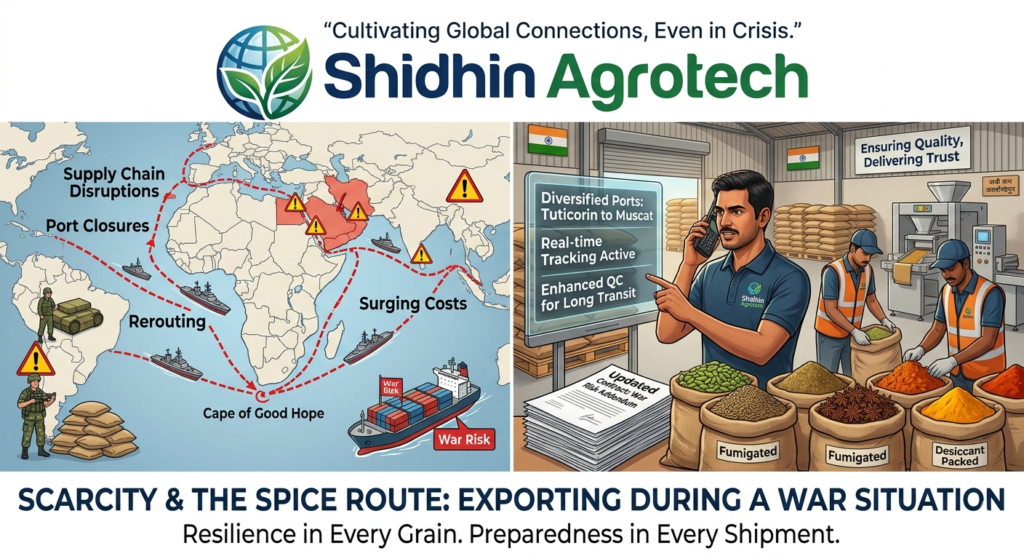
In times of war, “luxury” items like spices often take a backseat to fuel and medicine, but for the Middle East and South Asia, spices are a cultural and economic staple. We are currently seeing a dual-threat to the market:
- Production Collapse: Major hubs like Syria and Iran have seen production plummeted. Syrian cumin, for instance, has dropped from a pre-conflict high of 35,000 metric tons to less than 5,000.
- The Logistics Bottleneck: With the Red Sea and Strait of Hormuz facing intermittent closures and high-security risks, shipping has become a gamble. Most vessels are rerouting around the Cape of Good Hope, adding 10–15 days to transit times and nearly 3,500 nautical miles to the journey.
Scarcity in the Middle East
In countries directly impacted or adjacent to the conflict (like Saudi Arabia, Kuwait, and the UAE), the scarcity is manifesting in two ways:
- Price Volatility: Cardamom prices, for example, have fluctuated wildly, dropping in some auction centers due to export halts but skyrocketing in retail markets due to supply gaps.
- Inventory Freezes: Importers in the Gulf have reportedly asked exporters to “hold back” pre-ordered stocks because they cannot guarantee safe passage or have reached storage capacity for delayed goods.
How Exporters Can Navigate the Crisis
If you are an exporter, the “business as usual” manual is officially obsolete. Here is how to adapt to the “New Normal” of 2026:
1. Diversify Your Ports
Don’t rely on a single gateway. Indian exporters, for example, are shifting away from traditional Red Sea routes and utilizing:
- Southern Ports: Using ports like Tuticorin to serve the Middle East via the Oman Sea, bypassing the Red Sea entirely.
- Direct Lanes: Prioritizing direct shipping to Southeast Asia or East Africa to maintain cash flow while Western routes are blocked.
2. Update Your Contractual “Armor”
Standard contracts often don’t account for the nuances of a 2026 war scenario.
- War Risk Surcharges: Ensure your contracts clearly state who bears the cost of sudden insurance spikes (which can jump from $10,000 to $500,000 per voyage in high-risk zones).
- Force Majeure: Work with legal counsel to ensure your “Act of God/War” clauses are robust enough to cover port closures and government-mandated rerouting.
3. Precision Quality Control
In a war situation, a rejected shipment is a financial death sentence. With longer transit times (the “Cape Route” takes nearly a month longer), spices are at higher risk of:
- Moisture and Mold: Use enhanced desiccant packs and specialized lining for containers.
- Infestation: Rigorous pre-shipment fumigation is no longer optional; it’s a necessity for voyages lasting 40+ days.
4. Transparency is Your Currency
Buyers in the US and Europe are currently hesitant (some have suspended “call-ons” entirely). To win them back:
- Real-time Tracking: Provide buyers with GPS-linked data of their cargo.
- Proactive Buffers: Instead of promising a 20-day delivery and missing it, quote 40 days and deliver in 35.
Summary of Impact (March 2026)
| Factor | Impact Level | Current Trend |
| Freight Costs | High | 250% increase on affected routes |
| Transit Time | High | +10 to 21 days via Cape of Good Hope |
| Insurance | Critical | War risk premiums up by 15-25% |
| Demand | Shifting | Softening in the US; rising domestic demand in India/local hubs |
The spice trade has survived centuries of conflict, from the age of sail to the modern era. While 2026 presents a daunting challenge, the exporters who survive will be those who prioritize logistical flexibility over lowest-cost routing.