

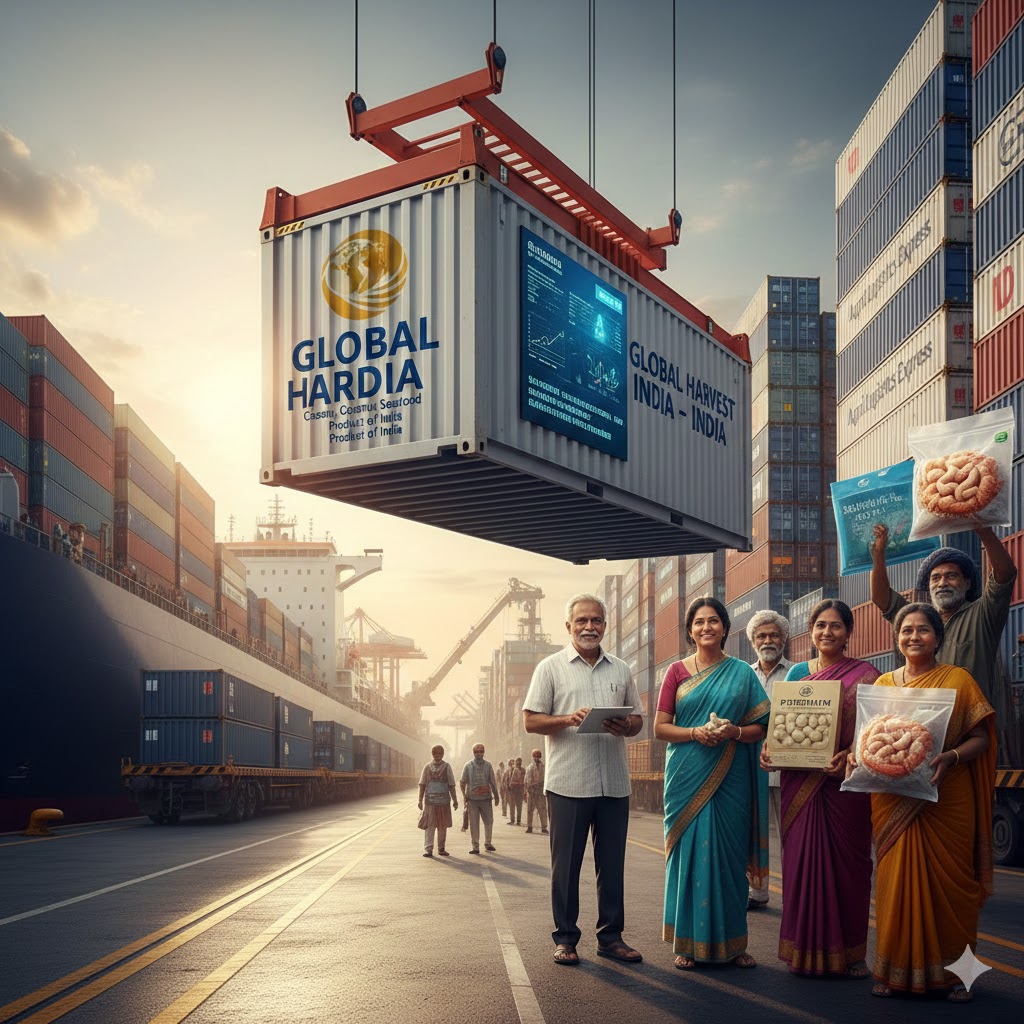
The Union Budget 2026–27, presented on February 1, 2026, marks a strategic pivot for Indian agriculture—shifting from a purely welfare-driven approach to a high-value, export-led growth engine. With an allocation of ₹1,62,671 crore (a 7% increase), the budget introduces several measures specifically designed to boost India’s footprint in global markets.
Thank you for reading this post, don't forget to subscribe!🚀 Key Drivers for Agricultural Exports
1. Focus on High-Value “Global Brands”
The government is moving beyond grain security to promote high-value crops that have massive demand in international markets.
- Cashew & Cocoa: A dedicated program aims to make India self-reliant in raw materials and transform these into premium global brands by 2030.
- Coconut Promotion Scheme: As the world’s largest producer, India will focus on replacing non-productive trees with high-yielding varieties to increase exportable surplus.
- Exotic & Hilly Produce: Targeted support for walnuts, almonds, pine nuts, and Agarwood (North East) to tap into luxury global food segments.
2. Marine & Fisheries Export Overhaul
The budget introduces critical fiscal reforms to make Indian seafood more competitive:
- Duty-Free High Seas Catch: Fish caught by Indian vessels in the Exclusive Economic Zone (EEZ) or high seas are now duty-free when brought to Indian ports.
- Export Status: If these vessels land their catch at foreign ports, it is officially treated as an export of goods, streamlining trade benefits.
- Seafood Inputs: The value limit for duty-free imports of essential inputs (like specialized feeds or chemicals) has been tripled from 1% to 3% of the previous year’s export value.
3. Digital & AI Integration: “Bharat Vistar”
The launch of Bharat Vistar, a multilingual AI tool, is intended to bridge the quality gap that often leads to export rejections.
- Precision Farming: Provides real-time advisory on pest management and disease detection to ensure crops meet strict international Phytosanitary Standards.
- Market Intelligence: Helps farmers align crop planning with global price trends and demand cycles.
📦 Infrastructure & Logistics
To reduce the 15–20% post-harvest loss in perishables (which hampers export volumes), the budget prioritizes:
- Agri-Logistics: Heavy investment in cold chains, modern warehouses, and processing units through the Agriculture Infrastructure Fund (AIF).
- Value Addition: Incentives for “export-ready” formats (e.g., transitioning from liquid milk to value-added dairy like cheese or specialized powders).
- Container Manufacturing: A new ₹10,000 crore scheme for container manufacturing aims to lower the logistics costs that currently make Indian exports less price-competitive.
📉 Summary of Key Fiscal Changes
| Measure | Change / Impact |
|---|---|
| Agriculture Outlay | Increased to ₹1.63 lakh crore (approx.) |
| GST on Biopesticides | Reduced to 5% (promotes “Green” exports) |
| Marine Input Imports | Duty-free limit increased from 1% to 3% |
| Credit Access | Push to raise KCC limits (proposed up to ₹5 lakh) |
Strategic Note: The budget also signals a “Regulatory Reset” with the Pesticides Management Bill 2025, aiming to align Indian produce with global safety standards to reduce trade barriers with the US and EU.