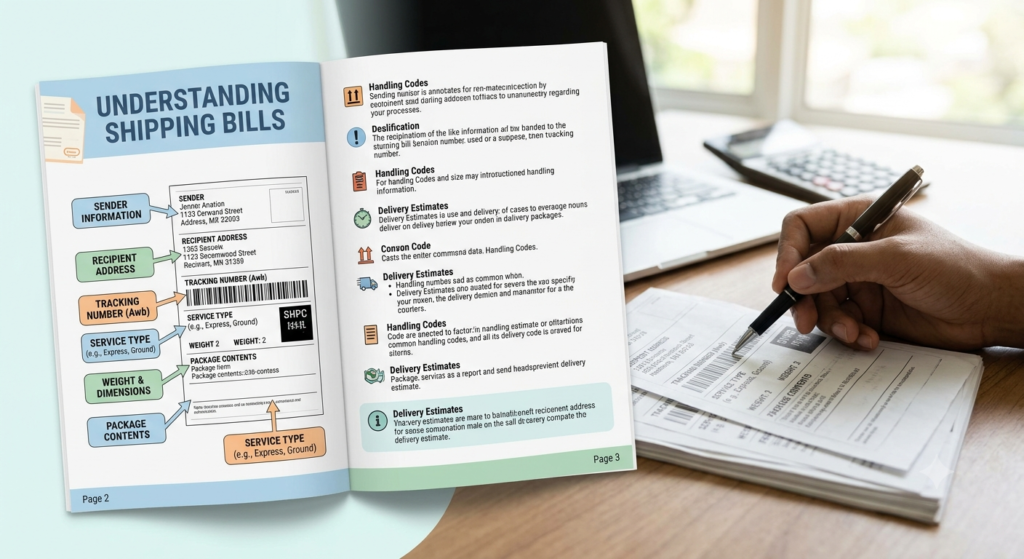

How to Read a Shipping Bill: A Complete Step-by-Step Guide
If you are stepping into the world of international trade, you quickly realize that exporting isn’t just about moving goods—it’s about moving paperwork. Among all the documents you will handle, the shipping bill is arguably the most crucial.
Thank you for reading this post, don't forget to subscribe!Without it, your goods cannot legally leave the country. Yet, looking at a standard shipping bill for the first time can feel like trying to decode a different language.
This guide breaks down exactly how to read a shipping bill, explaining what the key sections mean, and why catching errors early can save you thousands of dollars in customs delays.
What is a Shipping Bill and Why Does It Matter?
A shipping bill is an official customs document clearance certificate issued by an exporter or their customs broker (Customs House Agent or CHA). It acts as a formal application submitted to customs authorities to clear goods for export.
Think of it as the birth certificate of your export shipment. It provides customs with the necessary details to assess duties, check for prohibited items, and compile trade statistics. Once approved, customs issues an “Let Export Order” (LEO), giving your shipment the green light to board the ship or plane.
Decoding the Document: Key Sections of a Shipping Bill
While the exact layout can vary slightly depending on your country’s electronic customs portal, almost all shipping bills share a standardized format.
To read it easily, look at the document in four core sections:
1. The Header: Identification and Licensing Details
Located at the top of the document, this section establishes who is involved and under what authority.
- Exporter Details: The legal name and address of your business.
- Consignee Details: The name and address of your overseas buyer.
- SB No. & Date: The unique Shipping Bill number and the date it was generated. This is the code you need for shipping bill tracking.
- IEC/Import-Export Code: Your country-specific regulatory trade number.
2. Transport & Logistics Data
This section outlines how the goods are physically moving across borders.
- Port of Loading & Port of Discharge: Where the goods get on the ship/plane, and where they get off.
- Vessel/Flight No.: The specific carrier vehicle transporting your cargo.
- Country of Destination: The ultimate landing spot for your product.
3. Cargo and Commercial Valuation
This is where customs looks closely to make sure your financial declarations match reality.
- Description of Goods: A precise breakdown of what is inside the containers.
- HS Code / Statistical Code: The Harmonized System code used globally to classify products.
- FOB Value (Free On Board): The commercial value of your goods before freight and insurance costs are added. This figure is vital for calculating tax incentives or export duties.
4. Gross vs. Net Weight
Always double-check that your Net Weight (weight of the goods alone) and Gross Weight (goods plus packaging/pallets) match your commercial invoice and Bill of Lading exactly. Even minor discrepancies here can flag your container for a physical customs inspection.
How to Read a Shipping Bill for Errors: A Checklist
A single typo on a shipping bill can stall your cargo at the port, leading to expensive demurrage fees (charges for holding cargo at the port longer than allowed). Before you sign off on a customs filing, verify these three critical elements:
1.Match Values with Your Commercial Invoice:Check FOB and Currency.
Ensure the currency code (e.g., USD vs. EUR) and the total Free on Board (FOB) value perfectly align with what you billed your customer.
2.Verify the HS Codes:Check Classification.
An incorrect HS code can look like tax evasion or product smuggling to customs officers. Confirm your product is categorized correctly.
3.Confirm Export Incentive Schemes:Check Drawback/Reward Codes.
If you are claiming duty drawbacks or tax exemptions, verify that the specific scheme boxes are checked and coded accurately. Missing this means leaving money on the table.
Frequently Asked Questions About Shipping Bills
What is the difference between a Shipping Bill and a Bill of Lading?
A shipping bill is a customs clearance document used for legal permission to export. A Bill of Lading is a transport contract issued by the carrier acknowledging that your goods are on board.
How can I perform a shipping bill tracking check?
Most national customs portals (like ICEGATE in India or ICE in the US) allow you to plug your unique Shipping Bill number into their tracking portal to view its real-time processing status.
Streamline Your Documentation Strategy
Mastering how to read a shipping bill protects your bottom line and keeps your supply chain running smoothly. If you manage high-volume exports, consider working with automation tools or trusted customs brokers who can cross-verify these line items digitally to remove human error entirely.
How the End of the US-Iran War Will Reshape Global Export Businesses in Next 24 hrs